
Giap Ty 1984: Forge 5 strengths, lead by action

There are decisions that require an additional check. There are jobs that require a frank discussion. There are commitments that need to be put back on the calendar to be fully implemented.
In the role of running HRT, I want to start with such specific things.
The leader needs to understand the situation, choose priorities and create conditions for the team to complete the work. To do that, you must practice what you require of others: prepare carefully, communicate clearly, proactively update and take responsibility for the results.
With people of the same generation Giap Ty 1984, I want to share an orientation:
Build your strengths by doing every day. Observe carefully before deciding. Lead by responsible action.
Year of birth is a common point for us to connect and contemplate. Each person's ability, personality and direction are formed through circumstances, experiences, choices and training.
Therefore, the important thing is: today, what will I do to become more resilient?
Five strengths that need to be practiced to walk correctly and sustainably
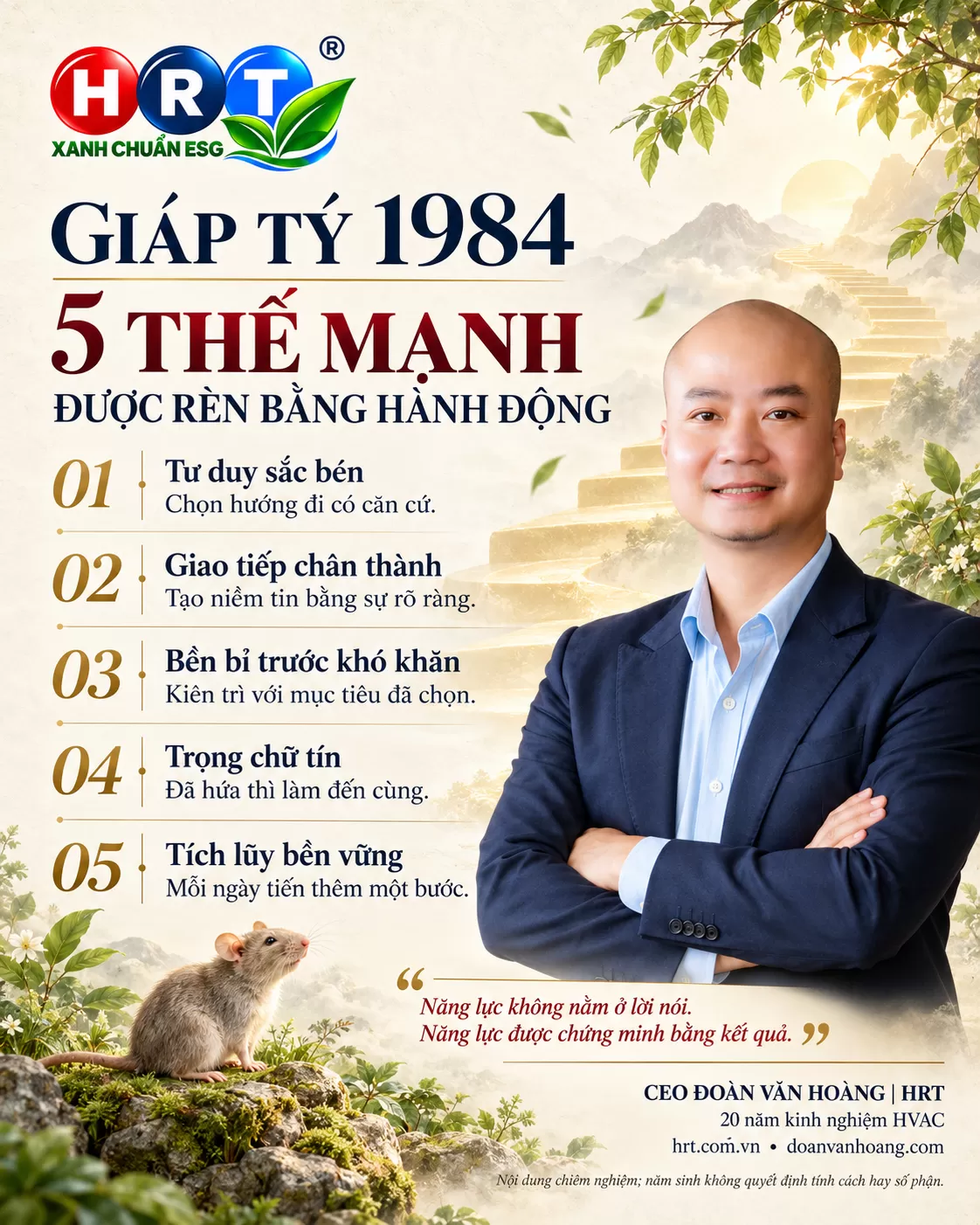
1. Sharp thinking: Choose a well-founded direction
Sharp thinking starts with the ability to identify problems and ask the right questions.
When a job is behind schedule, it is necessary to determine which part is stuck, how far the cause has been verified, and what information is missing.
When customers respond unsatisfied, it is necessary to compare expectations, the agreed scope and actual results.
I want every important decision to answer: What grounds make us choose this treatment method?
A simple way to practice is to clearly distinguish three parts: what is known, what is assumed, and what needs to be verified.
2. Sincere communication: Create trust with clarity
Sincere communication is shown in saying what you know and clarifying what you can do.
A statement "I will handle it" needs to be specified in terms of who is in charge, when to respond, and what results are required.
If there is not enough information, please clearly state what needs to be checked. If there are obstacles, please update them early so that both parties can adjust.
Sincerity also lies in listening fully, reconfirming requests and being willing to accept responsibility when you don't do things right.
3. Persistence in the face of difficulties: Persevere with your chosen goal
A meaningful goal often requires multiple iterations, testing, and adjustments.
When you get stuck, break the task into manageable parts. Each section needs a person in charge, a deadline, and an output.
Completing one step creates the basis for handling the next step.
For me, resilience is about the ability to get back to what's important, continue to solve problems, and maintain responsibility after stressful times.
4. Respect credibility: Be responsible for what is promised
Credibility is built through specific commitments: sending documents on time, providing complete feedback, completing assigned tasks, or showing up for family appointments.
Before accepting the offer, it is necessary to consider the possibility of implementation and related conditions.
After accepting the invitation, it is necessary to monitor progress. If the commitment is at risk of being affected, proactively discuss the situation, treatment plan and next update milestone.
Maintaining credibility requires carefulness when making promises and responsibility throughout the implementation process.
5. Sustainable accumulation: Take one step forward every day
A completed job can leave behind many values: experience, a better guide, more effective coordination or a strengthened relationship.
Take time to note those things.
After a significant work, I want the team to be able to answer: what should continue to be applied, what errors should be avoided, and what documents should be updated.
When lessons are retained and used, new experiences become cumulative competencies.
Leading by action: Five principles for putting strengths into practice
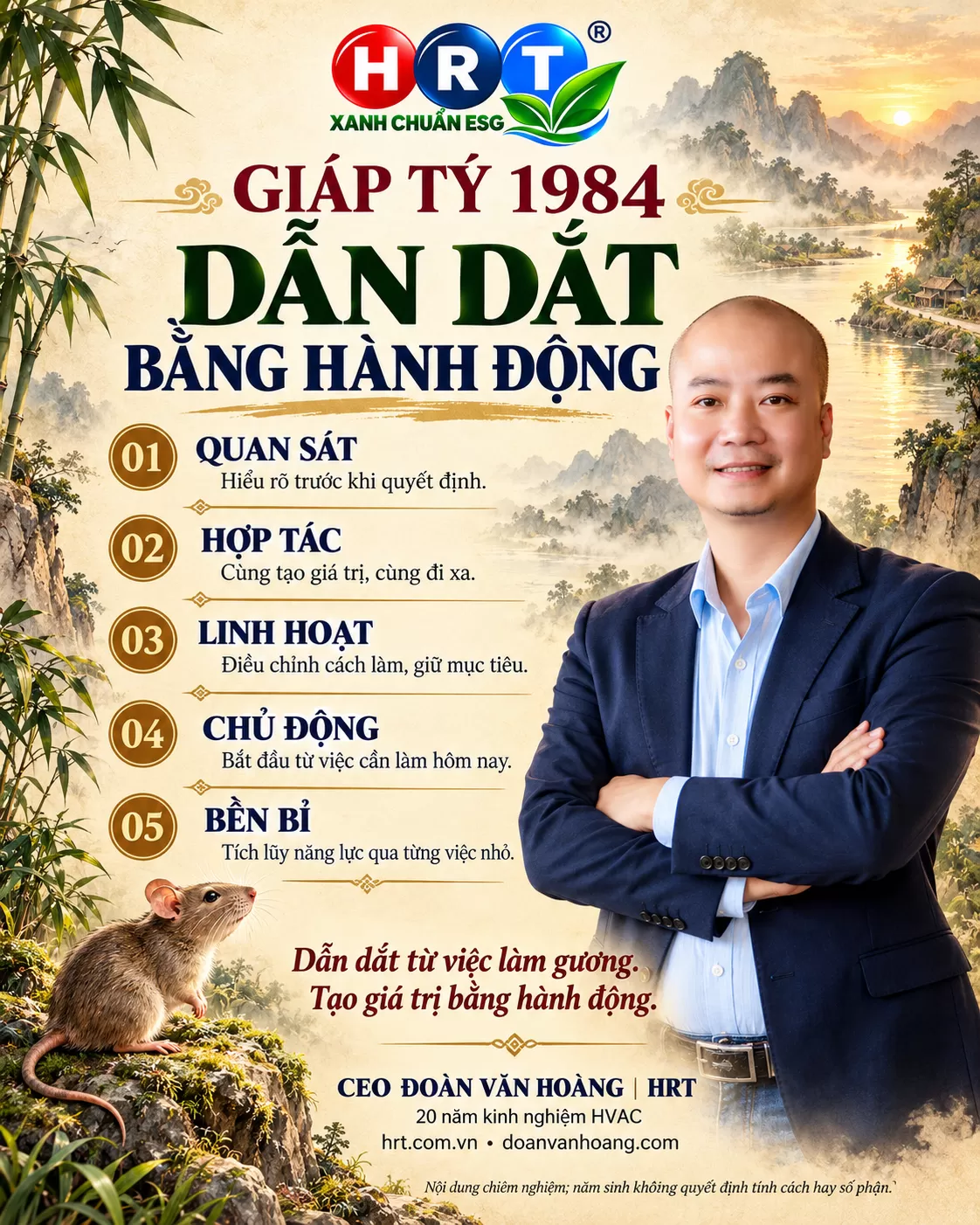
The above strengths need to be demonstrated in the way we decide, coordinate and handle work.
Message “Giap Ty 1984 – Leading with action” suggests five principles: Observe – Collaborate – Flexible – Proactive – Persistent.
These are things that can be practiced as a moderator, team leader, or someone who wants to manage themselves better.
1. Observe: Understand before deciding
Observation needs to be accompanied by understanding the context.
An employee who has not completed the job may be lacking information, have unclear requirements, or encounter problems beyond their handling authority. Managers need to verify the situation before drawing conclusions.
In technical work, I also emphasize checking the current status, comparing documents and clarifying requirements before proposing solutions.
Before an important decision, ask:
-
How far has the status quo been confirmed?
-
What results need to be achieved?
-
What information is missing or conflicting?
-
Who will check and when will a decision need to be made?
Jobs now: Choose a problem, clearly state what is known and what needs to be verified, then assign someone to check with a specific deadline.
2. Cooperation: Create value together, go far together
Effective collaboration requires a common goal and clear responsibilities.
In a job with many participants, each person needs to know their part, the input to be received, the results to be delivered and how to handle when obstacles arise.
It is the responsibility of the leader to facilitate that coordination.
If the team has not agreed on the requirements, clarify. If a person is lacking resources, consider how to provide support. If there is a disagreement, bring the conversation back to the problem and the desired outcome.
Collaboration also requires the ability to listen to other opinions, acknowledge contributions and take responsibility for the work received.
Jobs now: For a task with many parties involved, confirm the main person in charge, the handover part and the most recent coordination milestone.
3. Flexibility: Adjust ways of doing things, keep goals
The plan needs to be updated as actual conditions change.
If new information shows that the current implementation is not appropriate, review the work order, resources, or implementation plan.
Adjustments need to have a clear reason and be discussed with relevant people.
For example, when an input is not ready, it is necessary to determine which work can continue, which must wait, and which milestones will be affected.
During that process, quality, safety and responsibility for commitment still need to be maintained. If the original goals are no longer suitable, they must be reevaluated and agreed upon.
Jobs now: Review a plan that is lagging. Identify what needs to change, the basis for adjustment, and who must be updated.
4. Be proactive: Start with what needs to be done today
Being proactive starts with identifying what is within your responsibilities and abilities.
If you see an unclear request, confirm it. If you see a slow danger, report it early. If you see a forgotten commitment, bring it back to plan.
For leaders, proactiveness is also shown in preparing information before the meeting, making timely decisions and handling problems that the team needs support.
Being proactive also needs to come with limits of authority. For changes beyond the assigned scope, summarize the situation and propose a plan for the responsible person to decide.
Jobs now: Choose an important task that is waiting for you, determine the first step and set aside time to do it right in your calendar today.
5. Persistence: Accumulate capacity through each small task
Persistence in leadership is demonstrated through consistency.
Once the check mark has been agreed upon, it will be implemented. Once you accept responsibility, follow up. If errors are discovered, correct them and update ways to prevent them.
A small sustained improvement can become a common working habit: clearly stating the handover content, giving feedback on time or summarizing lessons after work.
When the leader practices regularly, the team has a specific way to observe and follow.
Jobs now: Choose a management habit to maintain, determine when to do it, and check back at the end of the week.
Leadership by example: Start with what you ask of others

I want to see role modeling through very real situations.
If the team is required to prepare before the meeting, the chairperson needs to clearly define the goals and content to be decided.
If requiring personnel to update progress, managers need to promptly respond to reported problems.
If we promote a sense of responsibility, leaders need to accept their responsibility when decisions are not appropriate.
If you want everyone to improve, you need to create conditions for suggestions to be exchanged and considered.
Lead by example. Create value with action.
This spirit can also be applied in the family: keep appointments, listen fully and keep what is promised. How we act every day is what those closest to us can see most clearly.
September lunar month 2026: Observe carefully, choose the right priorities

I want to use the message about the 9th lunar month as an opportunity to review the pace of work and the commitments being pursued.
Take time for four things: Stay calm in the face of fluctuations, check data before deciding, choose the right priorities and follow the work until results are obtained.
| Content of review | Question needs clarification | Results needed |
|---|---|---|
| Things are getting stuck | What's been confirmed, what's missing? | Checker and deadline for additional information |
| Current priority | Which directly affects the important commitment? | Up to three priorities in the coming period |
| Coordination | Where are the jobs waiting, who needs support? | The handover and responsible person are clear |
| Commitment is still open | What tasks are not completed or are at risk of being delayed? | Specific handling directions and update milestones |
After reviewing, put the selected items on the calendar. Each task needs someone in charge and a way to check the results.
Going in the right direction requires alertness. Going sustainably requires discipline and the ability to adjust.
CEO Hoang HRT's perspective: Correct Understanding - Clear - Dedicated in every action

Three values Understand Correctly – Clearly – Dedicated is the direction I want to bring to both my work and my way of life.
Get it Right: Observe and verify before choosing
Understand the needs, current status, implementation conditions and results to be achieved.
For parts with insufficient information, it is necessary to determine the need for further inspection. When the basis is clearer, the decision will have a basis for explanation and implementation.
Clarity: Turn wishes into concrete agreements
Clear goals, scope, person in charge, deadlines and completion criteria.
Clarity helps customers understand what to expect, teams know what to do, and managers have a baseline to follow.
Dedication: Follow the work until the results come
Prepare thoughtfully, proactively update, support when needed and complete unfinished tasks.
After work, continue to record lessons to do better next time.
That's how I want to translate the value of HRT into observable, testable, and maintainable behavior.
Giap Ty 1984: Actively building your capacity and journey

Each person has a different starting point. We can choose a competency to practice first, then start with a job that is suitable for our current situation.
If you want to think more clearly, check out an important piece of information.
If you want to cooperate better, let's clarify some of the tasks that are waiting for each other.
If you want to keep your trust, deal with an unfinished promise.
If you want to lead better, do something in advance that you are asking of your team.
If you want long-term accumulation, record a lesson and apply it to your next job.
Observe to understand clearly. Collaborate to create value. Flexible to adapt. Take the initiative to get started. Persistence to accumulate.
Today, write down three things: what needs to be done, when to do it, and what results are needed.
A clear action is the first step to building capacity and credibility for the road ahead.
CEO Doan Van Hoang | HRT
Understand Correctly – Clearly – Dedicated
Read more: Giap Ty 1984: Look at yourself to take action, move forward steadily.